
Wildlife on Great Blasket Island 2026: Seals, Dolphins & Atlantic Encounters
The 2026 season has begun with an incredible return of wildlife around Great Blasket Island, offering visitors a rare opportunity to experience one of Ireland’s most unspoilt natural environments.
While Atlantic weather has been changeable, every trip and visit to the island so far has brought memorable encounters — and the return of many familiar wildlife “old friends” we hadn’t seen since last autumn.
For those staying on the island, these moments are what make Great Blasket such a special place.
Grey Seals on Great Blasket Island – One of Europe’s Most Important Haul-Outs
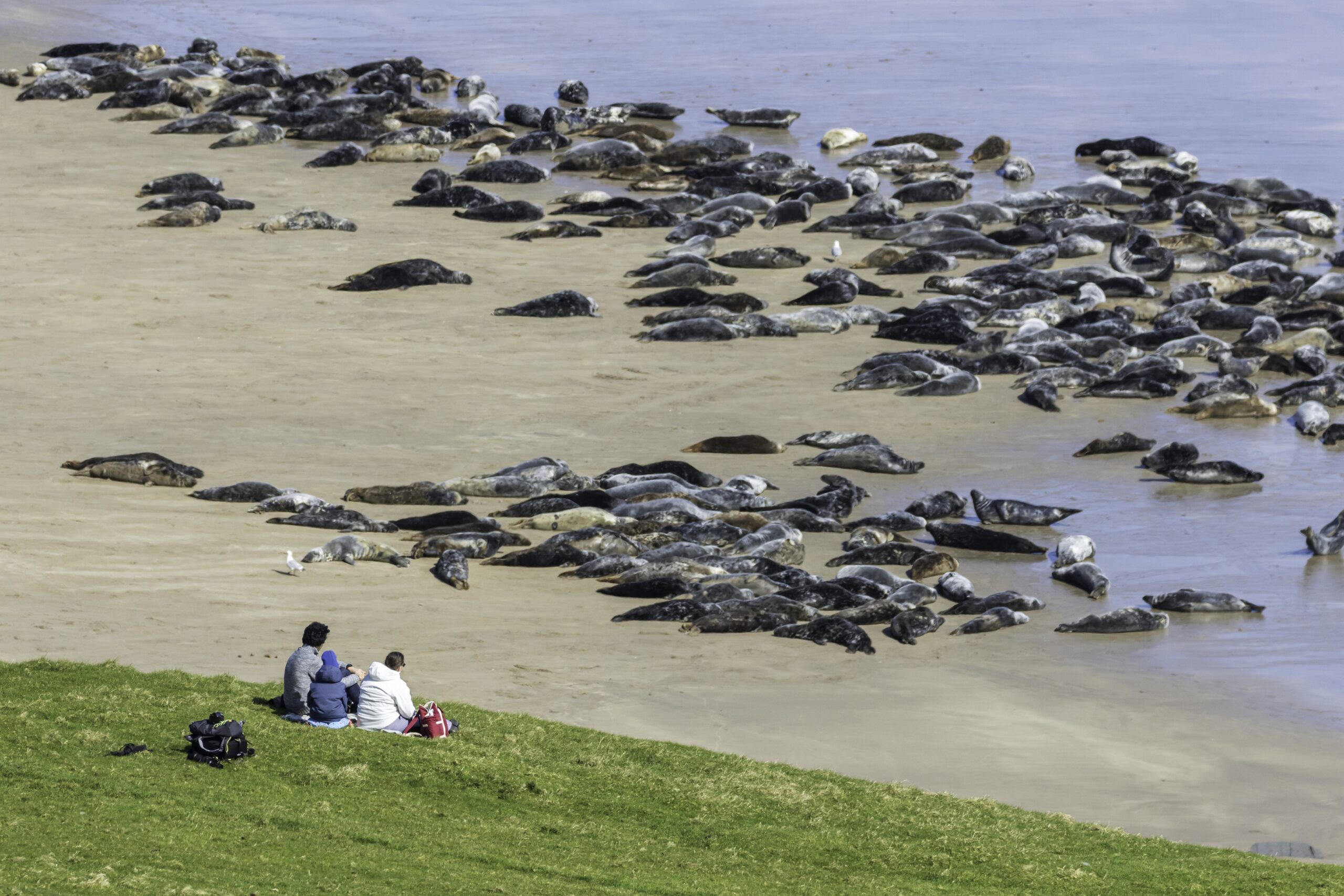
One of the most striking sights this spring has been the sheer number of grey seals hauled out along the beaches of Great Blasket Island.
This location has become one of the most significant haul-out sites in Europe. With fewer undisturbed sandy beaches remaining, Great Blasket provides a rare and vital refuge for seals to rest undisturbed.
Research through tagging and photo identification has shown that seals travel here from:
- Scotland
- Cornwall
- France
At peak counts, over 950 male grey seals have been recorded on the beach — a remarkable wildlife spectacle and one that guests staying on the island can experience up close.
From late March onwards, mainly males are present, while females remain at sea feeding during pregnancy. Their vocal and competitive behaviour adds to the drama of the scene.
Dolphins and Whales Around the Blasket Islands
The waters surrounding Great Blasket Island are rich in marine life, and this season has already delivered sightings of:
- Common dolphins
- Bottlenose dolphins
- Minke whales
Common dolphins are frequently seen in Dingle Bay, often travelling in pods and sometimes approaching boats with playful curiosity.
Minke whales, Ireland’s smallest baleen whale, can be more elusive, but when feeding they provide spectacular sightings close to the island.
Visitors staying on Great Blasket Island often experience the unique privilege of seeing these animals in their natural environment, far from crowds.
Familiar Bottlenose Dolphins from the Shannon Estuary
We’ve also seen the return of bottlenose dolphins, many of which belong to the well-known Shannon Estuary resident population.
These dolphins can be recognised by distinctive markings on their dorsal fins, and ongoing research allows scientists to track individual animals over time.
Their presence around the Blasket Islands highlights the importance of this area as a feeding and social habitat.
Risso’s Dolphins and Ongoing Research
Although less frequently seen in recent years, Risso’s dolphins remain one of the most fascinating species encountered around the Blasket Islands.
New research is underway to better understand their movements and behaviour in Irish waters, with photo identification helping to track individuals.
Encounters are rare but always memorable, particularly when mothers and calves are observed.
Basking Sharks – Spring Visitors to the Blasket Coast
Spring is one of the best times to spot basking sharks along the southwest coast of Ireland.
These gentle giants — the second-largest fish in the world — follow plankton blooms, which depend on sunlight, nutrients and sea temperature.
In recent years, the waters around Great Blasket Island have seen strong basking shark activity, attracting both researchers and visitors.
While sightings vary depending on conditions, early encounters this season suggest another exciting year ahead.
Experience Wildlife from Great Blasket Island
What makes Great Blasket Island truly unique is the opportunity to experience this wildlife while staying on the island itself.
Away from the mainland, visitors can:
- Watch seals hauled out on quiet beaches
- Spot dolphins and whales offshore
- Experience the changing Atlantic environment up close
👉 Plan your stay on Great Blasket Island:
https://www.greatblasketisland.net
Explore the Blasket Islands by Sea
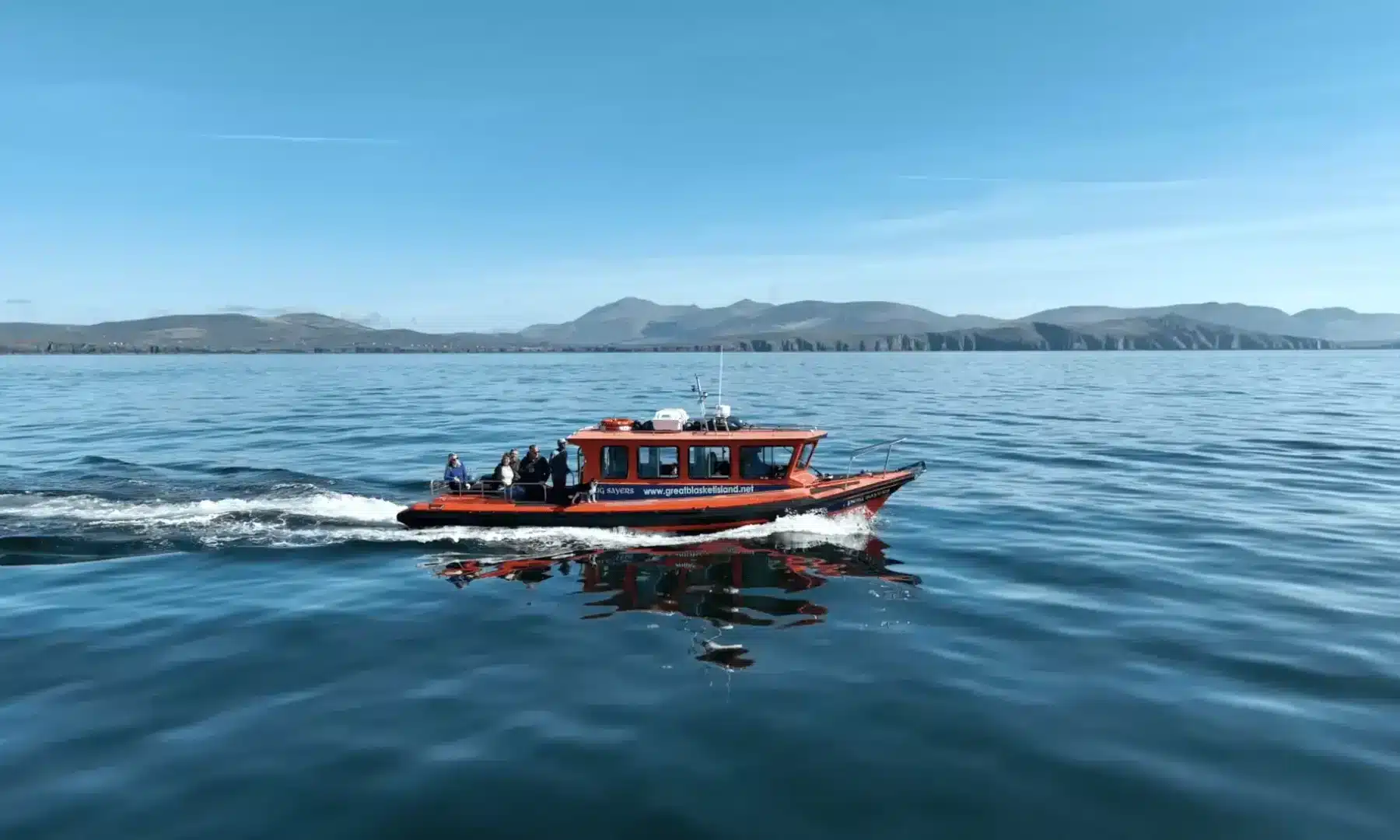
For those wishing to explore further, guided boat tours offer the chance to experience the full richness of Dingle Bay’s marine wildlife.
👉 View Marine Wildlife Tours: